BUSINESS
-
The Nigerian Economic Summit Group has urged the federal government to focus the next phase of economic reforms on reducing production costs, improving infrastructure, attracting productive investment and making public spending more effective. At the 32nd Nigerian Economic Summit in Abuja, Vice-President Kashim Shettima also said the government would continue easing regulatory burdens and improving policy predictability to support investment
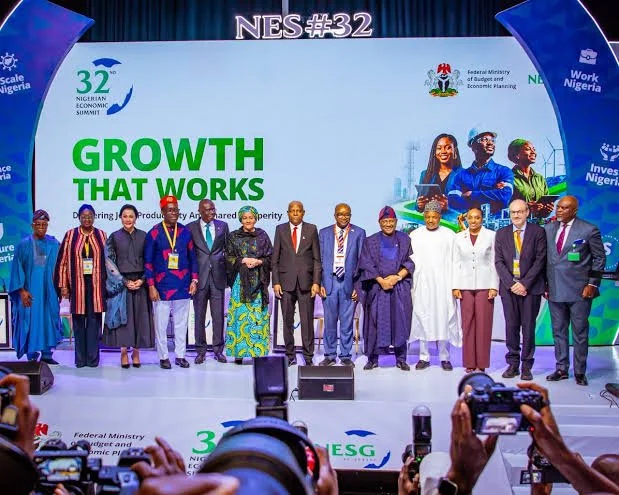
The Nigerian Economic Summit Group, or NESG, has called on the federal government to make lower production costs and more reliable infrastructure central to the next phase of economic reforms.
Speaking on October 26, 2026, at the 32nd Nigerian Economic Summit in Abuja, NESG chairman Olaniyi Yusuf said the reform agenda should also prioritise productive investment and more effective public spending.
Yusuf’s position comes as Nigeria records stronger economic growth. He said the country’s real gross domestic product grew by 4.43 per cent year-on-year in the second quarter of 2026, up from 3.89 per cent in the first quarter.
The comments point to a push for reforms that move beyond headline growth figures to the underlying costs and conditions facing businesses. High production costs and infrastructure gaps have long been key concerns for manufacturers, service providers and investors operating in Nigeria.
At the same summit, Vice-President Kashim Shettima said the federal government would continue to ease regulatory burdens, strengthen transparency and improve policy predictability to encourage investment.
That position suggests alignment between government and private-sector voices on the need to create a more stable and efficient operating environment. While Yusuf emphasised the need to reduce costs and improve infrastructure, Shettima highlighted regulatory and policy changes aimed at making Nigeria more attractive to investors.
Together, the messages from the summit underline a broader argument: sustaining economic growth will depend not only on reform announcements, but on whether businesses can produce, move goods and invest at lower cost and with greater certainty.
Why it matters
The summit intervention matters because it links Nigeria’s growth story to the practical conditions under which businesses operate. A stronger GDP reading may signal momentum, but high production costs, weak infrastructure and inefficient spending can limit how far that growth translates into jobs, output and fresh investment.
It also matters because both the NESG and the federal government are pointing to reforms as the next step. That increases attention on whether policy changes will be followed by improvements that businesses can feel in day-to-day operations.
What it means for your money
There is no immediate direct personal-finance change announced in the brief. But if reforms lower business costs, improve infrastructure and attract more investment over time, that could support prices, jobs and wider economic activity.
-
Attention will now turn to how the federal government translates these reform priorities into concrete policy actions. Businesses and investors will be watching for signs that regulatory easing, stronger transparency and more predictable policy are being implemented in ways that reduce costs and improve confidence.
There will also be close interest in whether future economic data continue to show growth and whether that growth is matched by better operating conditions across key sectors
The key message from the summit is that Nigeria’s next reform phase should focus on making it cheaper and easier to produce, invest and operate. With the government also promising to ease regulatory burdens and improve policy certainty, the real test will be whether those commitments deliver tangible improvements for the economy.
Five stories, the key numbers, and why they matter. Free, no ads.
Subscribe free