-
Two foreign investor groups have signalled plans to mobilise a combined $21 billion for Nigeria’s oil and gas sector under non-binding memoranda of understanding, according to Minister of State for Petroleum Resources Heineken Lokpobiri. He said in Lagos that one group indicated $15 billion and another committed $6 billion, while government is linking them with Nigerian companies for commercial discussions.
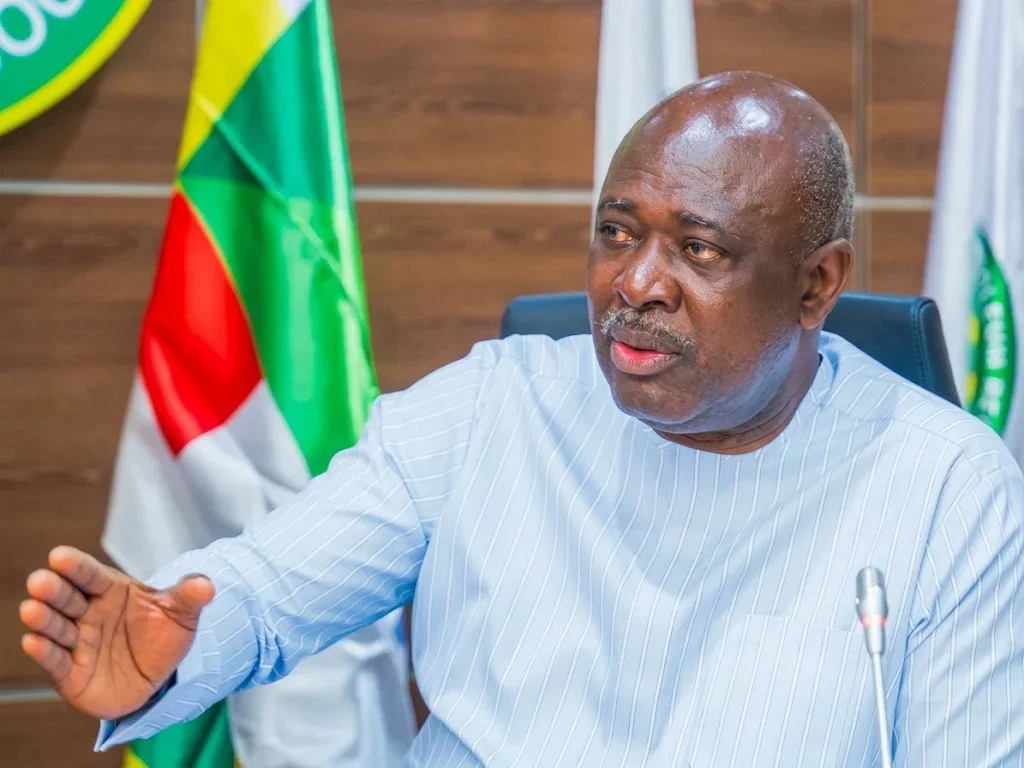
Two foreign investor groups have signalled commitments to mobilise a combined $21 billion for Nigeria’s oil and gas sector, with the plans currently framed under non-binding memoranda of understanding.
Minister of State for Petroleum Resources Heineken Lokpobiri disclosed this on November 10, 2026, in Lagos at the 44th annual international conference of the Nigerian Association of Petroleum Explorationists.
According to the minister, one group indicated willingness to mobilise $15 billion, while another group committed $6 billion. He said the government was connecting the foreign groups with Nigerian companies so they could discuss the commercial details.
Lokpobiri also said he was not directly involved in the commercial negotiations. His remarks suggest the government’s role, at this stage, is to facilitate engagement rather than negotiate the deals itself.
He also pointed to higher oil output as part of the broader sector picture. Citing Nigerian Upstream Petroleum Regulatory Commission records, Lokpobiri said Nigeria’s oil production had risen from about 1 million barrels per day, including condensates, when he became minister in August 2023 to more than 1.8 million barrels per day.
The announcement adds to the list of investment signals being discussed around Nigeria’s petroleum industry, but the minister’s description makes clear that the $21 billion is tied to non-binding agreements rather than concluded transactions.
That distinction is important in understanding the status of the proposed funding. For now, the disclosed amounts reflect investor intent and ongoing talks, not completed investments or final commercial terms.
Why it matters
The key point is scale: the two groups together signalled $21 billion, split between $15 billion and $6 billion. Just as important, the minister said the commitments are under non-binding memoranda of understanding, meaning the money has not yet been presented as finalised investment.
For Nigeria’s energy sector, the update shows continued foreign interest at a time the government is highlighting stronger production levels. It also shows that discussions are moving into company-level commercial talks, which is often where proposed investments are tested in practice.
What it means for your money
There is no immediate direct personal-finance impact for most Nigerians from this announcement alone. The disclosed commitments are non-binding and relate to sector investment discussions, so it would be premature to draw conclusions about fuel prices, jobs or government revenue from this statement by itself.
-
What happens next will depend on whether the foreign groups and Nigerian companies convert the non-binding understandings into firm commercial agreements. Readers should watch for any formal deal announcements, project details, timelines or regulatory filings linked to the proposed $15 billion and $6 billion commitments.
It will also be worth monitoring whether the government or regulators provide updated oil production data beyond the more than 1.8 million barrels per day figure cited by the minister.
Nigeria has been told to expect possible oil and gas investment totalling $21 billion from two foreign groups, but the commitments remain non-binding while commercial talks continue with Nigerian companies.
Five stories, the key numbers, and why they matter. Free, no ads.
Subscribe free