-
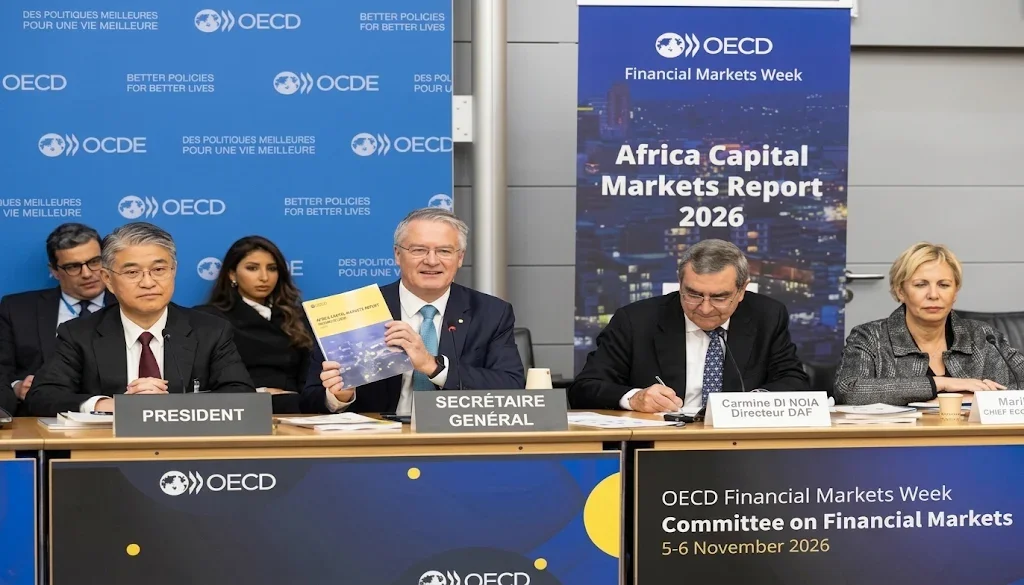
Six African countries accounted for 80% of the continent’s outstanding corporate debt as of December 2025, with Nigeria holding 16%, according to the OECD’s Africa Capital Markets Report 2026. That placed Nigeria second behind South Africa’s 31%, ahead of Egypt’s 13%, while Mauritius, Mozambique and Morocco held 9%, 6% and 5% respectively.
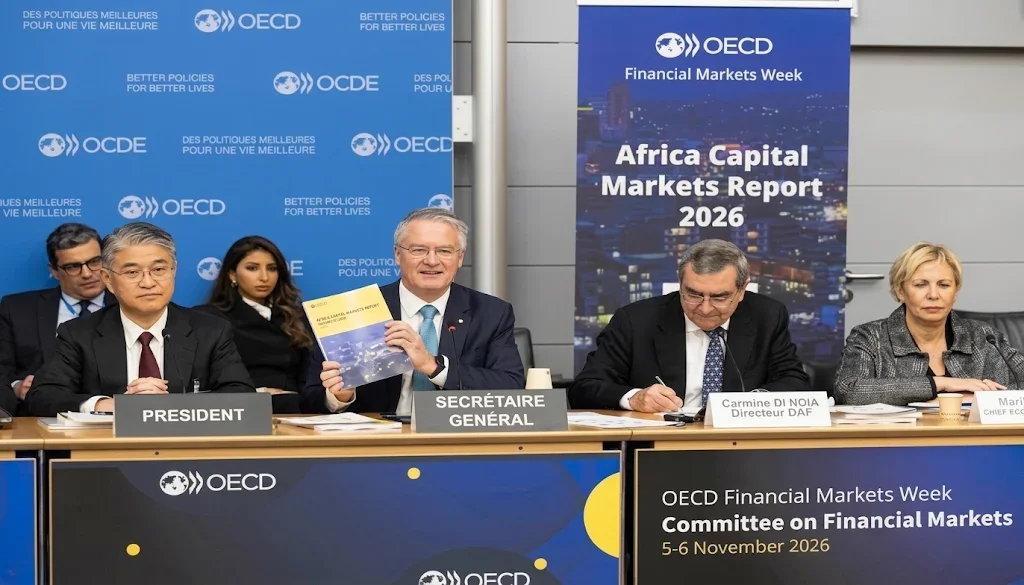
Nigeria accounted for 16% of Africa’s outstanding corporate debt as of December 2025, making it the continent’s second-largest corporate debt market after South Africa, according to the OECD’s Africa Capital Markets Report 2026.
The report showed South Africa held 31% of Africa’s corporate debt stock, while Egypt accounted for 13%. Mauritius held 9%, Mozambique 6% and Morocco 5%.
Together, those six countries made up 80% of Africa’s outstanding corporate debt. The figures point to a highly concentrated corporate debt market across the continent, with a relatively small number of countries accounting for most of the total.
The OECD also said African capital markets remain underutilised as a source of long-term finance. It added that Africa accounted for just 0.4% of global market capitalisation in 2024.
The report’s findings place Nigeria among the continent’s biggest centres for corporate borrowing through capital markets, even as the broader African market remains small in global terms. The OECD did not present Africa as a major global capital market by scale, but its data showed clear concentration in a few countries, with Nigeria among the most significant.
Why it matters
The figures matter because they show Nigeria is a major player in Africa’s corporate debt market, but also that the continent’s funding markets are still shallow compared with the rest of the world. When six countries account for 80% of outstanding corporate debt and Africa represents only 0.4% of global market capitalisation, it suggests limited depth, uneven access and room for further development in long-term financing markets.
What it means for your money
For most Nigerians, this report does not point to an immediate personal finance change. Its relevance is broader: it highlights the role of capital markets in how large companies raise long-term funding, which can affect business expansion and investment conditions over time.
-
What merits watching next is whether future OECD and market reports show Nigeria’s share rising or falling relative to South Africa, Egypt and other large markets. It will also be important to monitor whether African capital markets become more widely used for long-term finance, given the OECD’s finding that they remain underutilised. Another key indicator will be whether Africa’s share of global market capitalisation improves from the 0.4% recorded for 2024.
The OECD’s latest report shows that Africa’s corporate debt market is concentrated in a handful of countries, with Nigeria holding 16% and ranking second on the continent behind South Africa. It also underlines a wider point: African capital markets remain small and underused in global terms.
Five stories, the key numbers, and why they matter. Free, no ads.
Subscribe free