-
The Senate on Tuesday, November 10, 2026, passed for third reading a bill that would let the Central Bank of Nigeria identify, designate and register qualifying fintechs and other non-bank financial institutions as Systemically Important Institutions. The proposed amendment to BOFIA 2020 would also introduce stricter oversight tools, including stress testing, cybersecurity safeguards and enhanced regulatory reporting.
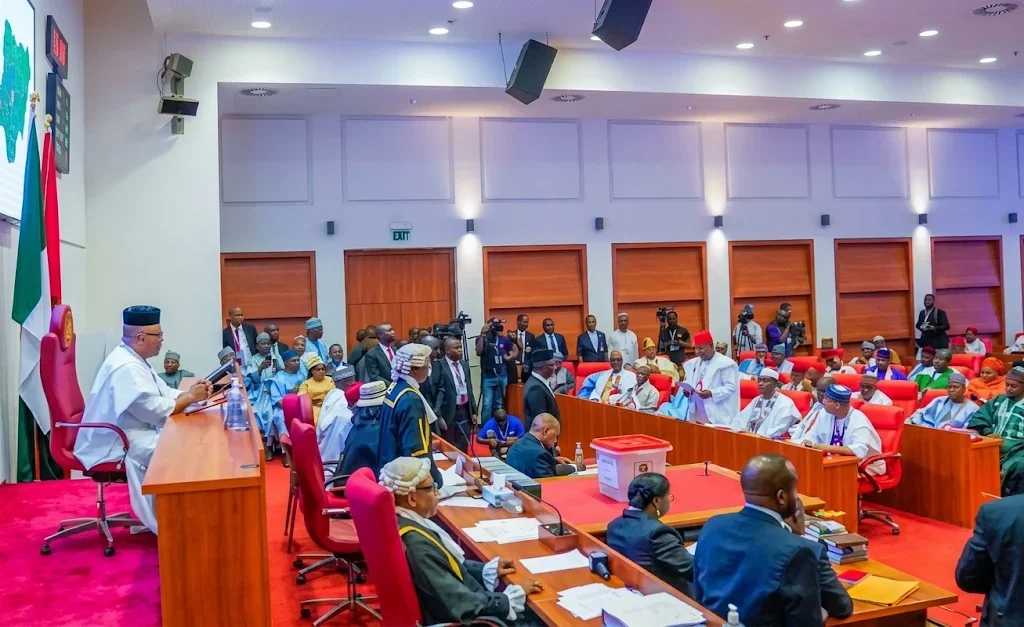
The Senate has passed for third reading a bill that would bring major fintech companies and other qualifying non-bank financial institutions under a stronger Central Bank of Nigeria supervisory framework.
Passed on Tuesday, November 10, 2026, the bill seeks to amend the Banks and Other Financial Institutions Act, No. 5 of 2020. Its full title is: A Bill for an Act to Amend the Banks and Other Financial Institutions Act, No. 5 of 2020, to Provide for the Designation, Registration and Enhanced Supervision of Systemically Important Institutions; and for Other Related Matters, SB. 959.
Under the proposed framework, the CBN would be empowered to identify, designate and register eligible fintechs and non-bank financial institutions as Systemically Important Institutions.
The bill also sets out a wider set of supervisory requirements for affected firms. These include stress testing, data-integrity assessments, enhanced regulatory reporting, corporate governance standards, cybersecurity safeguards, operational resilience requirements and supervisory access to relevant systems.
Leadership reported that the bill followed a public hearing held on March 4, 2026. According to that report, stakeholders that supported stronger risk-based oversight included the CBN, the Federal Competition and Consumer Protection Commission, the Nigeria Deposit Insurance Corporation, the Nigerian Communications Commission, the Economic and Financial Crimes Commission and several financial institutions.
The Senate vote marks a significant legislative step for Nigeria’s fast-growing digital finance space, especially for firms whose size or role could make them important to wider financial system stability.
Why it matters
The measure points to a shift in how Nigeria may regulate large fintechs and other non-bank financial institutions whose operations are considered important to the financial system.
If enacted and implemented, the framework would move beyond basic registration or routine compliance by allowing closer supervision of firms designated as systemically important. The focus areas listed in the bill show that regulators are looking at operational resilience, governance, reporting quality and cybersecurity alongside traditional financial oversight.
What it means for your money
There is no direct personal-finance impact confirmed yet for customers, savers or investors. For now, the main relevance is regulatory: larger fintechs could face tighter supervision if they are later designated under the proposed framework.
-
The bill has passed third reading in the Senate, but the brief does not confirm any further completed step beyond that. The next key point to monitor is whether the wider lawmaking process is concluded and how the CBN would define and identify institutions that qualify as systemically important.
It will also be important to watch for any official criteria, implementation guidelines or transition requirements for affected fintechs and non-bank financial institutions.
The Senate has advanced a BOFIA amendment that would allow the CBN to directly supervise qualifying major fintechs and other non-bank financial institutions as systemically important, with stricter requirements on resilience, reporting, governance and cybersecurity.
Five stories, the key numbers, and why they matter. Free, no ads.
Subscribe free