-
Nigeria’s State Police (Constitution Alteration) Bill, 2026 is set to go to President Bola Tinubu for assent in the week beginning Monday, November 16, after at least 32 State Houses of Assembly approved it. Senate Leader Opeyemi Bamidele said the approvals are above the constitutional minimum of 24 required for a constitutional amendment under Section 9(2) of the 1999 Constitution.

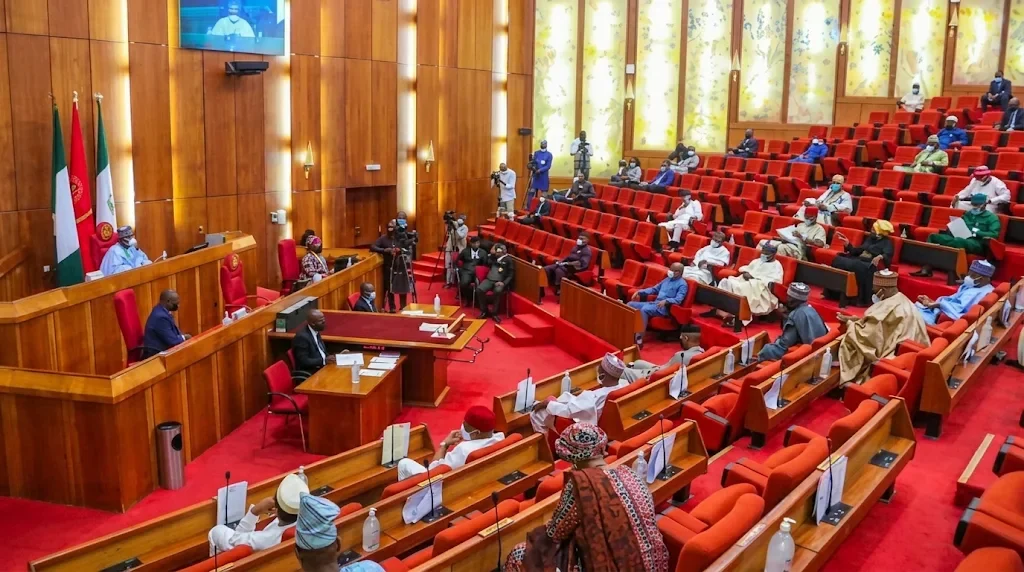
The National Assembly plans to transmit the State Police (Constitution Alteration) Bill, 2026 to President Bola Tinubu for assent in the week beginning Monday, November 16, 2026.
That step follows approval of the amendment by at least 32 State Houses of Assembly, according to Senate Leader Opeyemi Bamidele. Under Section 9(2) of the 1999 Constitution, a constitutional amendment requires backing from not fewer than 24 state assemblies.
The latest development is the planned transmission of the bill to the President after the state-level threshold was crossed. It goes beyond the earlier disclosure that 32 assemblies had endorsed the proposal.
BusinessDay reported that four additional State Houses of Assembly were still expected to submit their reports when the National Assembly resumes on Tuesday, November 17, 2026. However, Bamidele said the process would move ahead whether or not those reports were received.
If signed into law, the amendment would allow State Police Services to operate alongside the Federal Police Service. That would mark a change from Nigeria’s current centralised policing structure.
Why it matters
The bill has moved from debate and endorsements into the final federal stage before possible enactment. Crossing the constitutional threshold means the proposal now has enough state backing to be formally sent for presidential assent.
Its significance lies in what it would change: Nigeria would no longer rely only on a single central police structure. The amendment would open the way for state-level police services to exist alongside the federal police.
What it means for your money
There is no direct personal-finance impact confirmed in the supplied facts. For households and businesses, any financial implications would depend on what happens after presidential consideration and, if signed, how the new policing framework is implemented.
-
The immediate next step is transmission of the bill to President Tinubu in the week beginning November 16, 2026. Attention will then shift to whether he assents to the constitutional alteration.
It is also worth watching whether the four remaining State Houses of Assembly submit their reports after the National Assembly resumes on Tuesday, November 17, even though Bamidele said the process will proceed regardless.
With support from at least 32 state assemblies, the State Police bill has cleared the required constitutional threshold and is now heading to President Tinubu, bringing a long-debated policing reform closer to possible enactment.
Five stories, the key numbers, and why they matter. Free, no ads.
Subscribe free