-
A new Nigeria–East and Southern Africa air cargo arrangement will charge between $1.20 and $1.90 per kilogram, far below the $3 to $10 per kilogram many Nigerian exporters previously paid to reach African markets, according to official remarks reported by BusinessDay. RwandAir and Nigeria’s Federal Ministry of Industry, Trade and Investment signed a three-year operational roadmap for the corridor at CANEX WKND 2026 in Lagos after a four-month pilot phase.
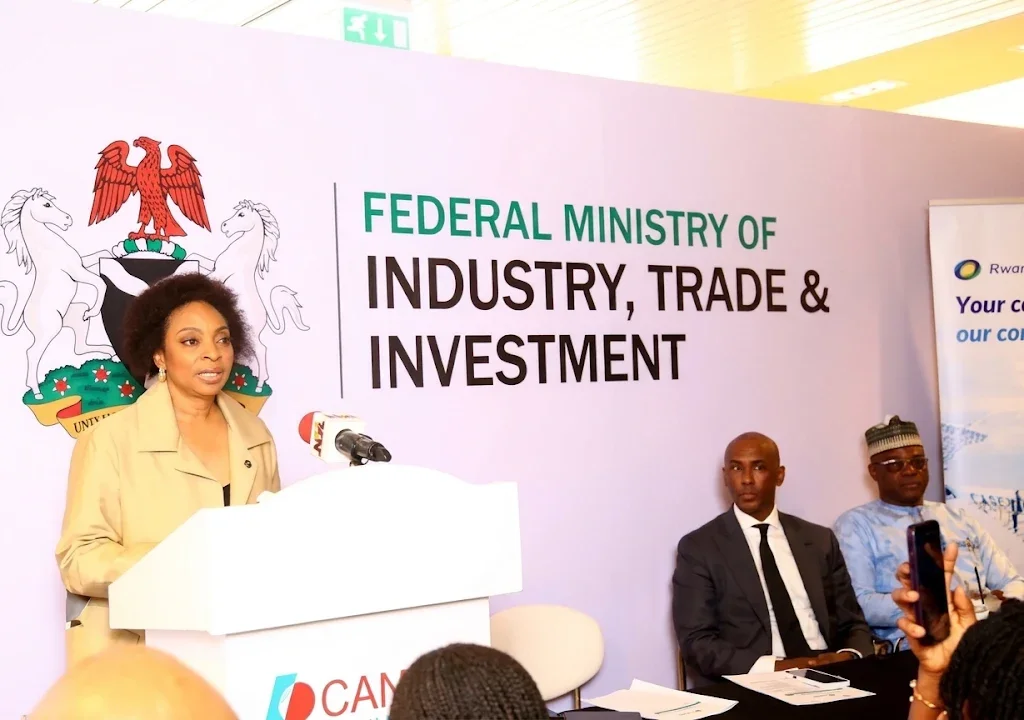
RwandAir and Nigeria’s Federal Ministry of Industry, Trade and Investment have signed a three-year operational roadmap for the Nigeria–East and Southern Africa Air Cargo Corridor, extending an arrangement that officials say could sharply reduce shipping costs for Nigerian exporters.
The roadmap was signed at CANEX WKND 2026 in Lagos on Friday, November 6, according to BusinessDay. Under the arrangement, cargo rates range from $1.20 to $1.90 per kilogram, depending on destination and shipment size.
That compares with the $3 to $10 per kilogram that many Nigerian exporters had previously paid to move goods to other African markets, according to Industry, Trade and Investment Minister Jumoke Oduwole.
The corridor links Lagos with Kigali, Nairobi, Johannesburg, Harare and Lusaka, creating a dedicated route into East and Southern African markets.
The deal follows a four-month pilot phase. Oduwole said the first shipment under the corridor left on June 19, 2026, with nine exporters sending goods to four destinations. Rwanda’s High Commissioner to Nigeria said close to 20 shipments had been made during the pilot.
The new roadmap gives the arrangement a longer operating window and ties it to Nigeria’s wider push to use the African Continental Free Trade Area to expand intra-African trade.
Why it matters
For Nigerian businesses, freight cost is often a major barrier to selling into other African markets. The most important shift in this deal is not just the signing ceremony, but the gap between the new corridor’s stated cargo rates and the higher charges many exporters previously faced.
If the pricing holds across regular operations, the corridor could make it easier for exporters to move goods beyond West Africa through a defined route rather than relying on more expensive ad hoc shipping options. The pilot phase also suggests the project has moved beyond planning into actual cargo movement.
What it means for your money
This has no immediate direct personal-finance impact for most households. Its relevance is mainly for exporters and trade-facing businesses that may benefit from lower air freight costs to selected African destinations if they can access the corridor rates.
-
What matters next is whether shipment volumes rise after the three-year roadmap signing and whether more Nigerian exporters begin using the corridor regularly. It will also be worth watching if the stated $1.20 to $1.90 per kilogram rate remains available across destinations and shipment sizes, and whether the network expands beyond the current cities of Kigali, Nairobi, Johannesburg, Harare and Lusaka.
The key development is the cost gap: Nigeria’s new cargo corridor with RwandAir is positioned to move exports into parts of Africa at rates well below what many exporters previously paid, after already completing a pilot phase with nearly 20 shipments reported.
Five stories, the key numbers, and why they matter. Free, no ads.
Subscribe free