Many Nigerians open the first bank account available and only discover later that the account type does not match how they earn, spend or save. That mismatch can cost money, create frustration and make budgeting harder. The right choice is usually not about which bank has the loudest advert. It is about whether you need a place to store money carefully, move money frequently or separate spending from savings.
Start with the job the account must do
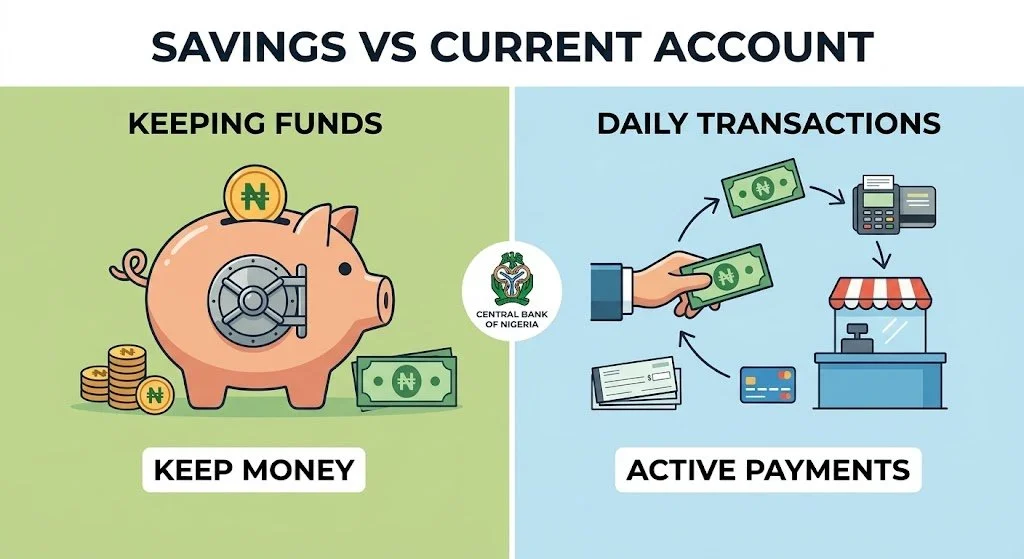
A savings account is usually the better fit if your main goal is to keep money, earn some interest and reduce the temptation to spend everything at once. It works well for salary earners, students, traders building an emergency fund and anyone setting money aside for rent, school fees or December expenses.
A current account is built more for frequent transactions. It is often the better choice if you run a business, collect many payments, pay suppliers regularly or need features commonly tied to day-to-day operations, such as cheque use. If money flows in and out constantly, a current account may be more practical than forcing a savings account to do a job it was not designed for.
Know the cost difference before you sign
One of the biggest practical differences is charges. Under Nigerian banking rules, current accounts can attract account maintenance charges, while savings accounts are generally structured differently and are also designed to pay interest, subject to the account terms and how you use the account. That means someone who simply wants to keep personal money may end up paying more than necessary if they choose a current account without a clear reason.
This does not mean a savings account is always free or always best. Transfer fees, card charges, alert charges and other service fees can still matter, depending on the bank and the channels you use. The smart move is to ask for the product terms and charges in plain language before opening the account, instead of assuming every naira account works the same way.
Use the account type to improve your money habits
If your salary lands in one account and disappears before the month settles, structure can help. Many people do well with a simple arrangement: use one account for receiving income and paying routine bills, then move a fixed amount into a separate savings account shortly after payday. That makes your savings less likely to be swallowed by transfers, airtime, food delivery and other small but steady spending.
If you run a side hustle or small business, avoid mixing personal and business money carelessly. A current account can make tracking business inflows and outflows easier, while a savings account can hold tax money, stock replacement money or a short-term target you do not want to touch. The point is not to collect many accounts. It is to give each account one clear purpose.
Check safety and complaint options too
Whichever account you choose, confirm that the institution is properly licensed and covered by deposit insurance. Also read the messages and statements your bank sends you. A product that looks convenient on day one can become expensive if you ignore the terms, the fees or the withdrawal pattern attached to it.
If a bank charges you wrongly or applies a feature you did not understand, complain to the bank first and keep your evidence. If the issue is not resolved within the allowed timeline, you can escalate the complaint to the Central Bank of Nigeria’s consumer protection channel. Choosing the right account matters, but monitoring it matters just as much.
If your priority is to keep money safe and build savings, a savings account is usually the cleaner and cheaper starting point. If you need heavier transaction use for business or cheque-based payments, a current account may be worth it. Choose the account for its job, not its name, and review the charges before you commit.
Five stories, the key numbers, and why they matter. Free, no ads.
Subscribe free