-
President Bola Tinubu has asked the National Assembly to approve ₦10.79 trillion in external borrowing, equivalent to about $7.7 billion at the 2026 budget exchange rate of ₦1,409 to the dollar. Senate President Godswill Akpabio said the new request supersedes an earlier external borrowing proposal of about $20.3 billion, and the Senate has referred it to its Committee on Local and Foreign Debts.
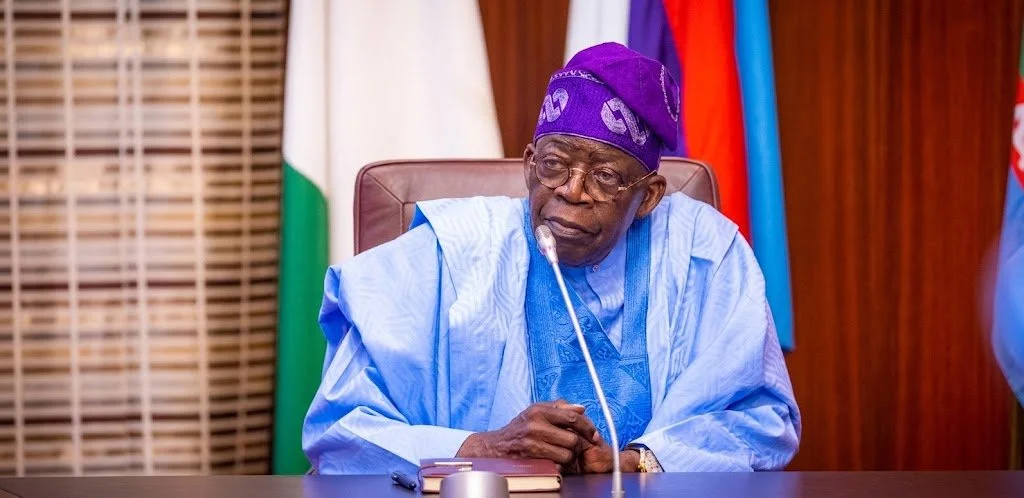
President Bola Tinubu has replaced an earlier external borrowing proposal of about $20 billion with a fresh request for ₦10.79 trillion, equivalent to about $7.7 billion, to help finance the 2026 budget deficit.
In a letter read in the Senate, Tinubu asked the National Assembly to approve the external borrowing plan using the 2026 budget exchange rate of ₦1,409 to the dollar. Senate President Godswill Akpabio said the request effectively superseded an earlier proposal of about $20.3 billion. TheCable reported that it replaced the previously reported $20.5 billion plan.
Tinubu said the 2026 Appropriation Act provides for ₦29.2 trillion in new borrowing to fund a budget deficit of about ₦31.4 trillion. According to the letter, that borrowing mix comprises ₦18.4 trillion in domestic borrowing and ₦10.79 trillion in external financing.
The proposed external financing sources include multilateral and bilateral loans, IMF facilities, bridge financing, direct borrowing from international financial institutions and Eurobond issuance. The letter said greater emphasis would be placed on Eurobonds.
After the request was presented, Akpabio referred it to the Senate Committee on Local and Foreign Debts for consideration and a report back to the chamber.
The fresh request means the administration is now formally seeking a smaller external borrowing approval than the earlier plan that had been before lawmakers. The request remains part of a broader borrowing framework tied to financing the 2026 budget deficit rather than a standalone funding programme.
Why it matters
The revised request gives a clearer picture of how the federal government plans to fund the 2026 budget gap. It also shows a shift from the earlier, much larger external borrowing proposal to a lower figure of about $7.7 billion, while keeping domestic borrowing as the bigger component of planned new debt.
For the wider economy, the composition of borrowing matters because external loans, IMF-related facilities and Eurobond issuance can shape government financing costs and debt exposure. The Senate review is therefore an important step before any final approval.
What it means for your money
For most Nigerians, this is mainly a public finance development rather than an immediate personal finance change. Its direct effect on households will depend on how the borrowing is approved, raised and used within the 2026 budget, but no direct consumer measure was announced in the request.
-
The Senate Committee on Local and Foreign Debts is expected to review the request and report back to the chamber. What merits close attention is whether lawmakers approve the borrowing mix as proposed and how much of the external component is eventually sourced through Eurobonds, multilateral lenders or other facilities.
Tinubu has asked lawmakers to approve ₦10.79 trillion, or about $7.7 billion, in external borrowing for the 2026 budget, replacing an earlier proposal of about $20 billion. The request is now before the Senate committee responsible for debt review.
Five stories, the key numbers, and why they matter. Free, no ads.
Subscribe free